
When you're comparing plumbers, it's easy to focus entirely on the final number. But the pricing model behind that number often matters just as much — because it determines who bears the risk if a job takes longer than expected, and whether you actually know what you're paying before work begins.
How hourly pricing works
Under an hourly model, you're billed for the technician's time — often with a minimum charge — plus materials. The final cost isn't fully known until the job is finished.
The upside: for very simple, predictable jobs, hourly can sometimes work out cheaper if everything goes exactly to plan.
The downside: you're taking on the risk. If a "quick fix" turns into something more complicated once a wall is opened or a pipe is accessed, the meter keeps running — and you find out the final number only at the end.
How flat-rate pricing works
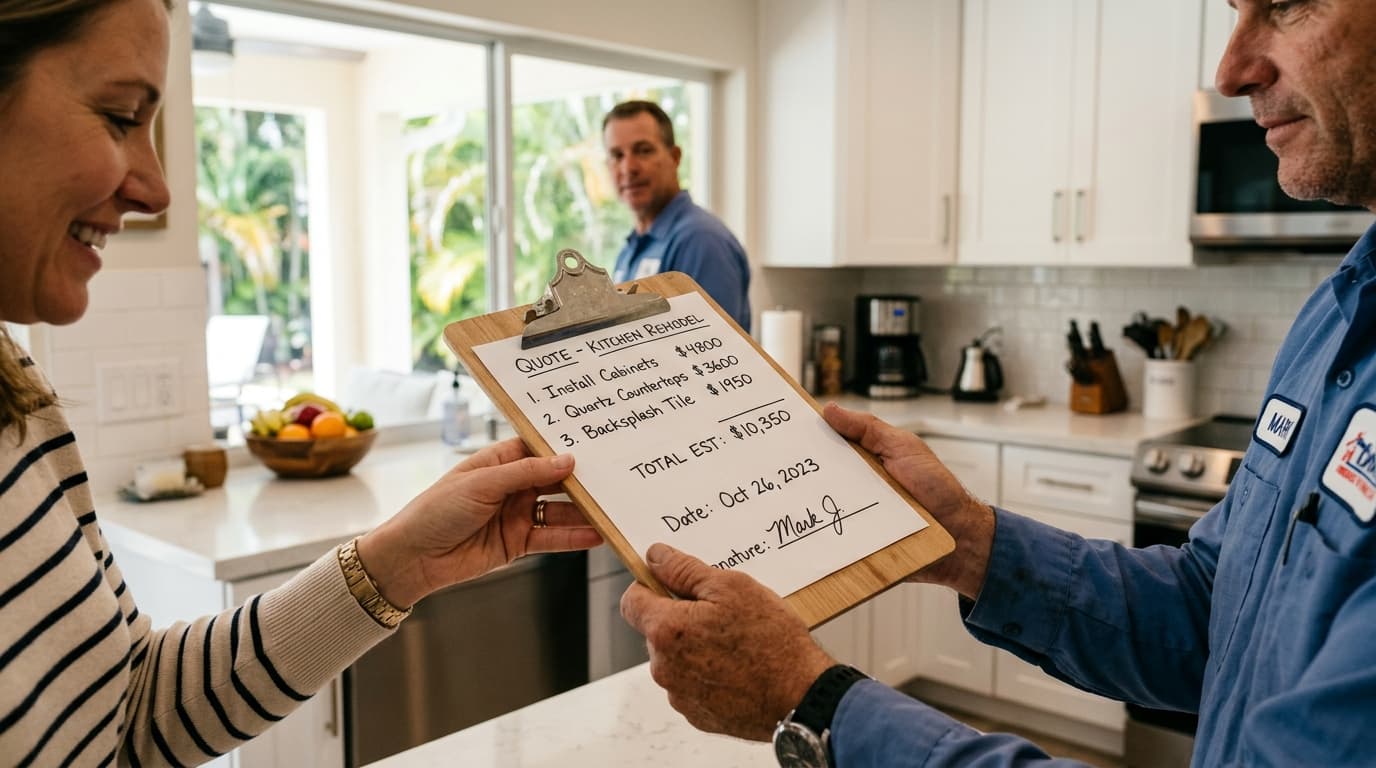
Under a flat-rate model, the plumber diagnoses the issue first, then presents a fixed price for the specific job — before any work starts. You approve that number, and it's what you pay regardless of how long the job actually takes.
The upside: you know the exact cost before committing to anything. If the job takes longer than the plumber expected, that's their risk to absorb, not yours.
The downside: for a job that turns out to be genuinely simple and fast, flat-rate pricing can occasionally cost a bit more than a very efficient hourly job would have. In our experience, most homeowners still prefer the certainty.
Why we price flat-rate
We diagnose first, quote a flat rate for exactly what needs to happen, and you approve that number before we turn a wrench. If we get into a job and discover something that genuinely changes the scope — a section of pipe in worse shape than expected, for example — we stop and requote before doing any additional work. You're never billed for time we spend figuring things out, and you're never surprised by a final invoice that doesn't match what you agreed to.
Questions worth asking any plumber
- "Is this quote flat-rate, or will I be billed by the hour?"
- "Is the diagnostic fee waived if I approve the repair?"
- "If the job turns out to be more involved, will you requote before continuing, or just keep the clock running?"
- "Is this price final, or are there potential add-on fees?"
A plumber who answers these clearly and consistently — regardless of which pricing model they use — is one worth trusting. The red flag isn't hourly pricing itself; it's vagueness about how you'll actually be charged.
The bottom line
Neither model is inherently dishonest, but flat-rate pricing removes the guesswork and puts the risk of an underestimated job on the plumber rather than the homeowner. That's why it's the standard we hold ourselves to on every job, from a simple faucet repair to a full repipe.