
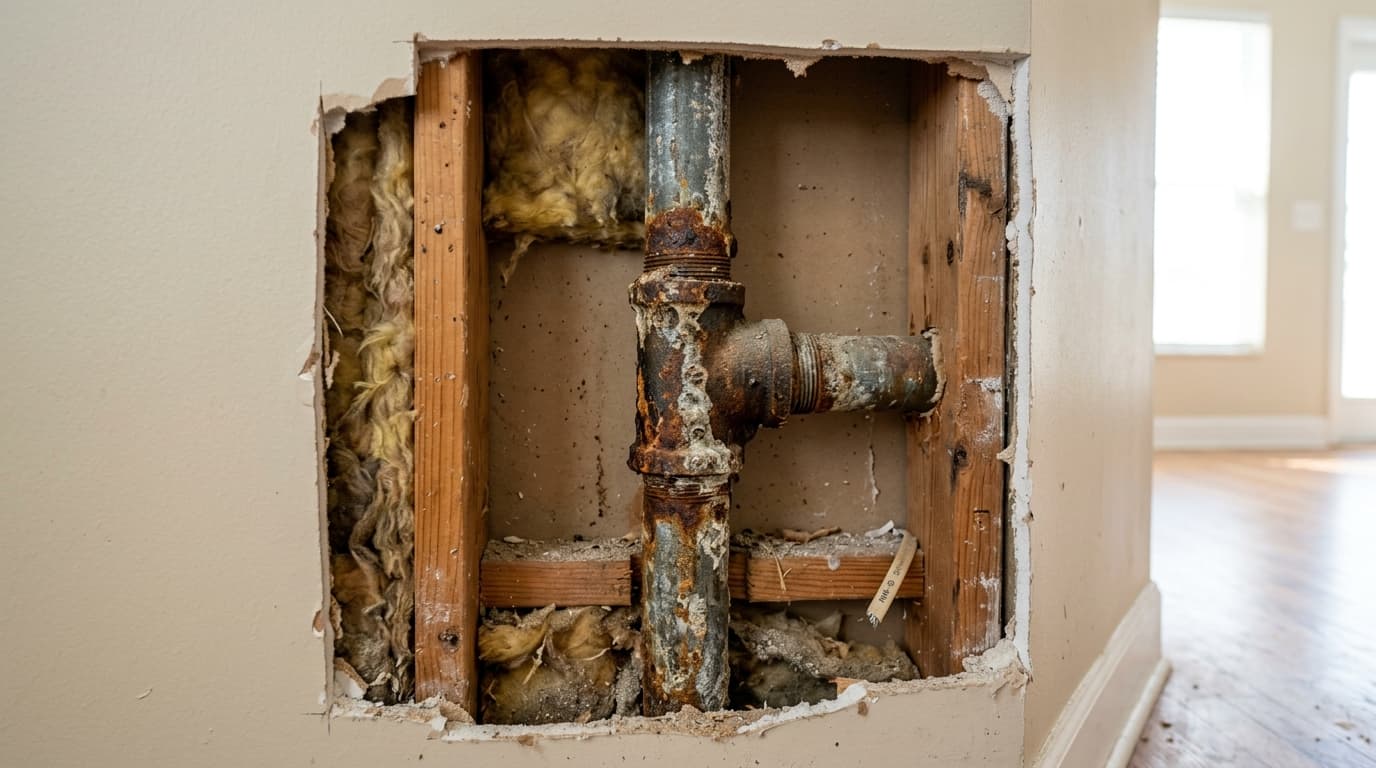
Homes built before the mid-1990s across Volusia County — especially closer to the coast — were commonly plumbed with galvanized steel or, for a stretch in the 1980s, gray polybutylene pipe. Both materials have a predictable failure pattern, and both tend to fail from the inside, which means the first sign of trouble is often a wall, ceiling, or slab leak rather than anything visible.
Galvanized steel pipe
Galvanized pipe is steel coated in zinc to resist corrosion. The coating breaks down over decades, and once it does, the steel underneath rusts and scales from the inside. That scale narrows the pipe's interior diameter over time — which is why declining water pressure is often the very first symptom, long before an actual leak.
Typical lifespan: 40–60 years, meaning most galvanized systems still in service today are at or past the end of their realistic working life.
Polybutylene pipe
Gray or blue polybutylene ("poly-B") was installed in a large share of U.S. homes from the late 1970s through the mid-1990s because it was cheap and fast to install. It later turned out to react badly with chlorine and chloramine used in municipal water treatment, causing the pipe to become brittle and crack from the inside — often with no external warning.
Typical lifespan: Poly-B has a well-documented history of unpredictable failure, which is why many insurers now flag it during underwriting.
Warning signs worth acting on
- Recurring pinhole leaks, especially in copper pipe that's corroding from mineral-rich water
- Persistent low water pressure across multiple fixtures, not just one
- Rust-colored or discolored water from more than one tap
- Visible ceiling or wall staining with no obvious external source
- A home inspection report flagging galvanized or polybutylene supply lines
- A spike in your water bill with no explanation (often a slow slab leak)
Any one of these on its own might be minor. Two or more together is a strong signal it's time for a whole-home assessment rather than another one-off repair.
What a repipe actually involves
A planned repipe replaces your home's supply lines — typically with PEX or copper — on your schedule, rather than waiting for a pipe to fail on its own. The process usually includes:
- A whole-home assessment to map every pipe material in the house
- A choice between PEX and copper based on your home and budget
- Careful access planning to minimize drywall cuts
- Pressure testing every new line before any wall is closed
- Permit and inspection with the local jurisdiction
Most single-story homes are done in 2–4 days, with water shut off only during active work windows.
Is it worth doing before something fails?
A planned repipe on your own timeline is almost always less disruptive and less expensive than an emergency repipe after a wall or slab leak causes water damage. If your home fits the profile above, a whole-home assessment is a reasonable, no-pressure first step — we'll tell you honestly what we find, including if your current pipe still has useful life left.