If you live in DeLand, Deltona, DeBary, Orange City, or one of the more rural pockets of west Volusia County, there's a good chance your home runs on well water rather than a municipal supply. That water comes straight from the Floridan Aquifer — and while it's often perfectly safe to drink, it's also typically loaded with dissolved minerals that create real, expensive problems for your plumbing.
What "hard water" actually means
Water hardness is a measure of dissolved calcium and magnesium, expressed in grains per gallon (GPG). Anything above 7 GPG is generally considered hard; a lot of west Volusia well water tests well above that. Those minerals don't stay dissolved forever — as water heats up or sits, they precipitate out as scale.
Where the damage shows up
Water heaters. Scale builds up on the heating element or inside the tank, forcing the unit to work harder to heat the same amount of water. It's one of the most common reasons we see water heaters fail years before they should.
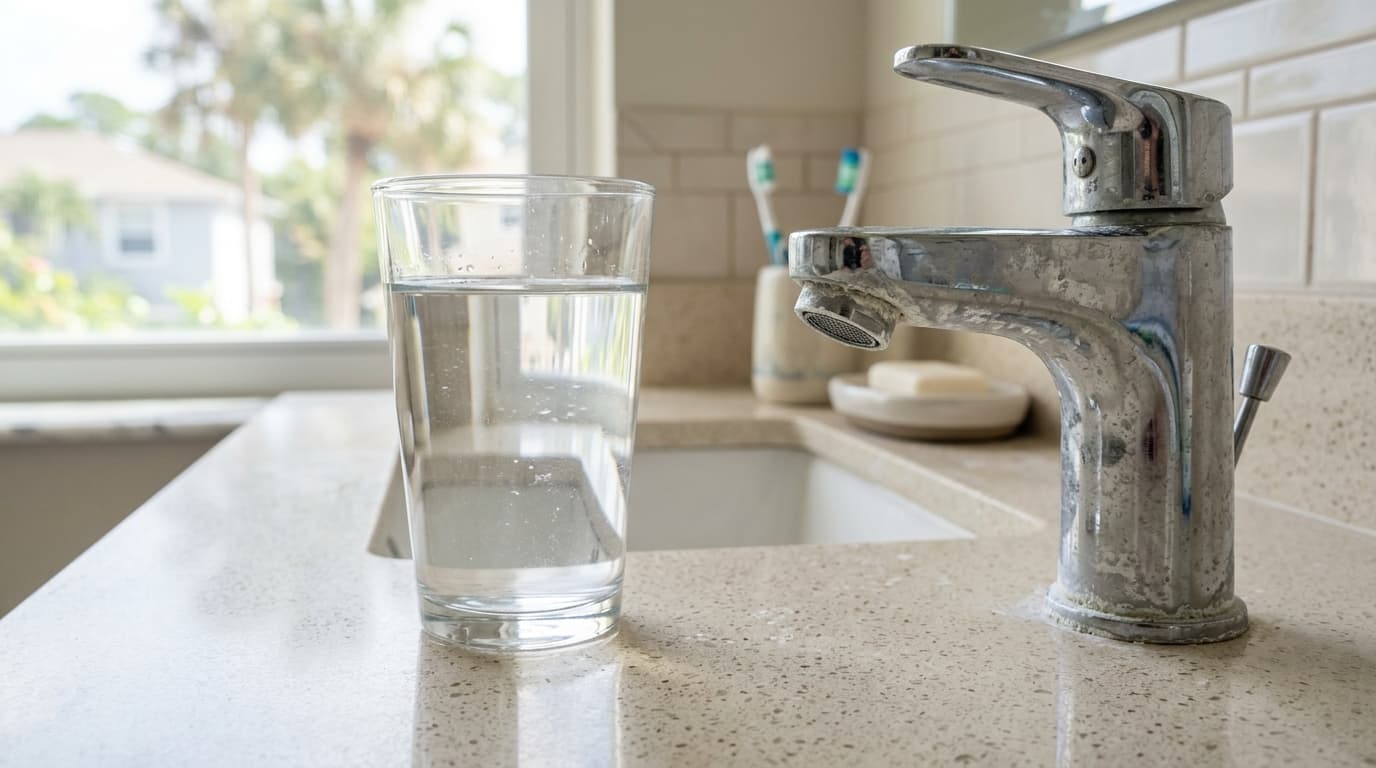
Fixtures and faucets. White, crusty buildup on showerheads and faucet aerators is scale — and it's restricting flow long before it's visible.
Appliances. Dishwashers and washing machines are full of small water pathways that scale can narrow over time, shortening their working life.
Soap and skin. Hard water reacts with soap to form a filmy residue instead of a proper lather, which is why skin and hair often feel dry after a shower on well water.
Iron is a separate problem
Many west Volusia wells also carry elevated iron, which shows up as a metallic taste, orange-brown staining on fixtures and laundry, or a "rotten egg" sulfur smell if hydrogen sulfide is also present. Iron and hardness are related but distinct — a water softener alone won't necessarily resolve iron staining if levels are high enough; it sometimes needs a dedicated iron filter working alongside it.
Testing before treating
The honest first step isn't buying a softener — it's testing. We measure actual hardness (grains per gallon) and iron content at your home, because guessing at a system size either wastes money on unnecessary capacity or leaves you under-treated. A softener sized to your real numbers and household size performs better and costs less to run than a generic one-size-fits-all unit.
What treatment actually looks like
For most west Volusia homes on well water, the fix is a combination of:
- A salt-based water softener to remove hardness minerals at the source
- Iron filtration, when testing shows elevated iron levels
- Whole-home carbon or sediment filtration, if sulfur odor or cloudiness is also present
These systems tie into your main line after the pressure tank and treat every tap in the house — not just the kitchen sink.
Is it worth it?
Most homeowners who install a properly sized softener notice the difference within a week: softer skin and hair, less soap needed, no more filmy dish residue, and fixtures that stay clean longer. The bigger financial case is what it protects — water heaters, dishwashers, and washing machines all last longer without a steady diet of scale buildup.
If you're not sure whether your water is a problem, that's a fair place to start. A hardness and iron test takes a few minutes and gives you a real number instead of a guess.